Navigating the 2026 Home Purchase: Deposits, Inspections & Title | RE Real Estate Podcast
Clint C. Galliano, REALTOR® (00:00)
You've made an offer and it was accepted. Congratulations! But guess what? Hard parts are not over. We've still got a lot of fun to go.
Welcome to another episode of the RRE Real Estate Podcast. I'm Clint Galliano and joining us is the co-host, Ben Harang We're sitting here and we got some nice, comfortable weather. It was cool overnight and the sun's kind of warming things up during the day. How you doing over there in Thibodeau, Ben?
Ben Harang, REALTOR® (00:44)
Clint I'm doing terrific, man. How you doing today?
Clint C. Galliano, REALTOR® (00:48)
I'm doing wonderful. Had a closing this morning. Getting things lined up before going on Christmas vacation. All the fun stuff.
Ben Harang, REALTOR® (00:51)
Awesome.
Yeah, yeah, that's always a good thing.
Clint C. Galliano, REALTOR® (00:58)
So what are we talking about today?
Ben Harang, REALTOR® (01:00)
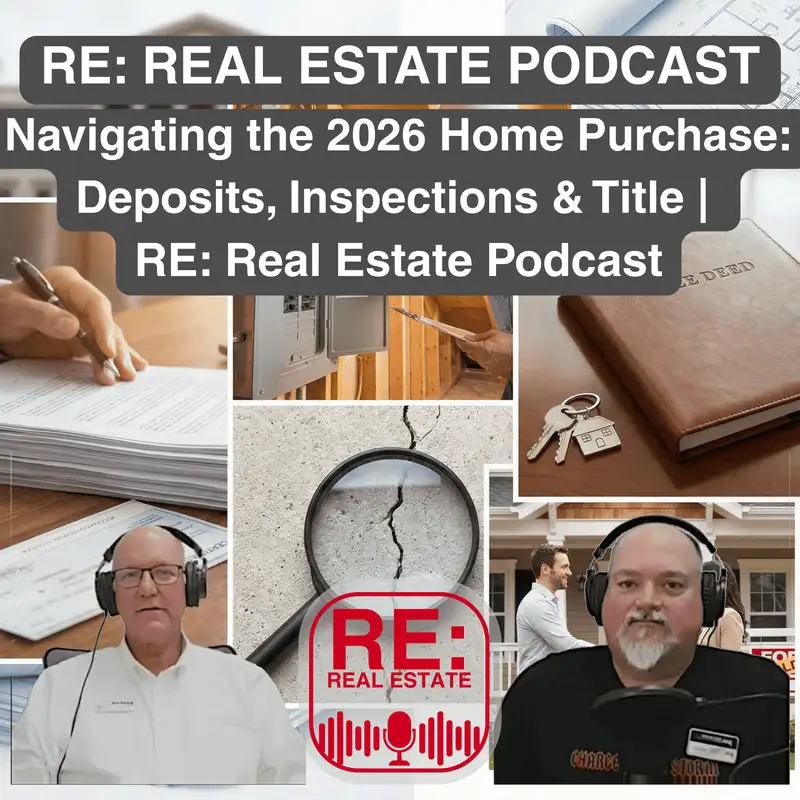
Well, we're going to talk about the pieces of what happens after we have an agreement on a piece of property or a house, the good faith deposit, the inspections, and the title work that's involved to get us to the closing. So that's the things we're going to talk about. So let's see where it goes, Clint.
Clint C. Galliano, REALTOR® (01:25)
Alright, that sounds good.
Alright, so first thing we're going to talk about is the good faith deposit. In other states they use earnest money. Earnest money is slightly different. Louisiana uses a good faith deposit. So what is it? It's a security deposit that shows the seller that you're serious and that you're willing to put skin in the game to make this purchase.
significant amount or well it's not really a significant amount but it's a token amount that you're putting money up lot of people do $500 and regardless of what the price that a property is but typically you're looking at anywhere from a half percent of the purchase price up to 2 % of the purchase price depending on what market you're in and the property type and price
It can be held by our preferences that it be held by either a listing or selling broker, but it can also be held by a title company or real estate attorney. The downside with that is that they are typically, that's title company or real estate attorney, they're typically not gonna make a decision if there's a dispute on who gets that deposit back, and you'll wind up having to go to court over it.
So that's why we always advocate that you have either the listing or selling brokerage hold that deposit. and we kind of refer to this as a golden rule. If you walk away from a valid contract reason or with a valid contract reason, that would be inspection or financing, you usually get it back. If you ghost a seller, change your mind without cause, then you lose your deposit.
Key takeaway is, this is the engagement ring of money. You're promising to marry the house, providing nothing crazy comes up. You kind of wish you could have that in life relationships with people.
Ben Harang, REALTOR® (03:24)
You're right. You're right. All right. The next role, the next step is the home inspection. The objective is to get an unbiased view of the house. The inspector works for the buyer, not for the lender, not for the seller, not for the agents involved, work for the buyer. They look at the structural, electrical, plumbing, HVAC and safety issues.
in the house. There is no perfect house. Every house is going to have some some type of issue with it. Some more minor than others or some more major than others, but every house is going to have some issues. That's just the nature of construction. If you think you can beat
Clint C. Galliano, REALTOR® (04:06)
And I'd like to add
to people ask, excuse me, people ask about, know, did we pass the inspection? There's no pass or fail in the inspection. It's just a report on the condition of the house.
Ben Harang, REALTOR® (04:21)
It's an unbiased view because they don't care if you buy the house or not. but if you, if you want to buy a house, it sometimes it becomes an emotional decision and not an objective decision. And it's kind of puts it in reality. so the red flags versus the honey-do lists, the red flags are things like a foundation crack, active leaks, aluminum wiring, which is a no-no and mold. honeydews are some
maybe some peeling paint or loose door knob or an older appliance that's still working. The inspection period is used to get a deeper look at the house and for the buyer to get a comfort level at what they're buying. If they ask for any repairs to be made or concessions, they do it during the inspection period. If you decide you don't want to buy the house,
uh... and you think it's a lemon you have the right to walk away within that inspection period uh... i tell buyers that the inspection the inspection is subject to it being acceptable to you the buyer not to me as the agent not to the seller not to the lender you as a buyer have to be comfortable with it because you're the one buying the house
Clint C. Galliano, REALTOR® (05:30)
Alright, next is the title company. So they're kind of the unsung heroes. While the inspector checks the physical house, title company checks the legal house. They provide a title abstract.
And they do that by looking back 30, 40, 50 years in the history of the transactions for sale or lack thereof of that piece of property based on its legal description, not its address or anything like that. And that's called a title search. And what they're doing is verifying chain of title that the seller actually legally owns the home.
They look for liens, unpaid taxes, judgments, or long lost heirs who might claim ownership. And those would all be clouds on the title and make it not necessarily saleable without some type of curative work. They also provide title insurance. There are two types of title insurance policies that you can get. One, if you're purchasing with a mortgage.
Typically your lender will require you to have a lender's title policy and this protects the bank's investment based on whatever the loan balance is. It declines in value at the loan balance and the bank gets that money if there is a title issue that comes up.
⁓ The other type is the owner's policy. Some people say it's a ripoff to get an owner's policy, but here in Louisiana with the history of shady transactions and then also long, long history of families passing property down over the years without ever doing a secession.
It's always good to get an owner's title policy just in case somebody was missed that may have a claim on the property. It protects you so that if they come back five years down the line, you don't have to worry about, well, I spent all this money. They'll go to court for you and they will either defend your ownership of the title.
or if the other claim is stronger, then at that point, they will reimburse you for what you spent for the house. All right, so outside of lending, the next thing that you'd look at is closing day, and the title company is the conductor for closing day, more or less. They collect the money from the bank.
and from the buyer they pay off the seller's mortgage, they record the deed with the local parish assessor so that it becomes a document of record. that's what the title companies provide for you. They also can provide powers of attorney and other advice on an ad hoc basis if needed.
Ben Harang, REALTOR® (08:29)
All right. Now, how does all this work together? The first thing is the offer gets accepted. Once the offer is accepted, we collect the good faith deposit and that's delivered to the title company, the listing broker, selling broker, whoever it's agreed to that's going to the good faith deposit. Then we
Engage an inspector and that's the the seven to fourteen day inspection period a due diligence period Somewhere in there the lender orders the appraisal we hadn't talked about that, but they order the appraisal and then the title company like clint says orders the abstract to make sure the seller actually owns it and are able to sell it and then
Closing day is hopefully anticlimactic. All the work's done. Uh, we show up, we exchange pleasantries, introduce buyers to the sellers cause that's the best place for a buyer and a seller to meet is at the closing table. And we sign the documents. The, the most important of which is the cash sale, uh, property in Louisiana doesn't have a title like an automobile does. has a
a deed or a cash sale that's transferred when it's filed in the Clerk of Courts records and makes it public and that declares that you own it. So it's not a long list of things that happen, but they all have to be done in conjunction with the others. And as they're done, we check them off the list and we
deal with the contingencies and as we no longer have the contingencies, when we run out of contingencies, we show up at the closing table. So that's just an oversimplification of what happens, but that's pretty much how it happens.
Clint C. Galliano, REALTOR® (10:25)
Hopefully the lender got all of the payments and who pays what and the amounts correct.
Ben Harang, REALTOR® (10:30)
Yes, that's always a good thing.
Clint C. Galliano, REALTOR® (10:32)
That's just an allusion to a story that we're not going to tell today.
Ben Harang, REALTOR® (10:35)
Right,
right. I said I'm not telling any stories today.
Clint C. Galliano, REALTOR® (10:40)
And that's story enough. All right, so to wrap things up or to reiterate, the deposit equals your commitment to purchase the property. The inspector verifies the current condition of the home and gives you better insight into what condition the home is in. The title proves
Ben Harang, REALTOR® (10:41)
Yes.
Clint C. Galliano, REALTOR® (11:03)
Title proves your legal ownership or they insured your legal ownership. So that's kind of the, I guess, short and sweet way of thinking about it. you're ready for the homework? You ready for homework, Ben? Well, you don't need to do. I know you don't like homework, but well, then technically you don't need to do this homework. But if you are buying soon, research your inspectors early.
Ben Harang, REALTOR® (11:18)
I don't like homework.
Clint C. Galliano, REALTOR® (11:29)
and don't be afraid to ask your title officer questions. They're here to protect you. Typically, if you're working with a real estate agent and you don't have a preferred title company or inspector, ask them if they have recommendations. Do that before you get under contract. It makes it a lot easier to go through the process if you've got these things lined up. And as it's stated in the purchase agreement, time is of the essence.
So the sooner you can get that ball rolling, the sooner you can get to the closing table. All right. Appreciate everybody listening and watching. Remember to like, share, comment, share it with your friends, subscribe, whether it's on YouTube or your favorite podcast app, and let your mom and them know. And if you know of anybody that's
looking to buy or sell or become a real estate agent, get in touch with Ben or myself.
Ben Harang, REALTOR® (12:25)
we are easy to find at rerealestatepodcast.com ...
Clint C. Galliano, REALTOR® (12:31)
Yeah, I think that's rerealestatepodcast.com isn't it?
Ben Harang, REALTOR® (12:35)
Did you say RERealEstatePodcast.com? I think so. Yeah, we have all our contact info there. Call us, text us, email us, whatever your preferred method of communication is, and we'll respond and answer your questions. So, all right, Clint, enjoyed it, man. Have a good one.
Clint C. Galliano, REALTOR® (12:39)
I think so.
All right, man, you too. It's another one in the can.
Ben Harang, REALTOR® (12:59)
Alright.
Creators and Guests