BUILT TO OWN: You Were Never Meant to Stay Stuck
Clint C. Galliano (00:00)
For the next 10 weeks, we're gonna take apart everything you think you know about ownership, wealth, and what's actually possible for you.
If you've ever quietly assumed that wealth was for other people, then this is what you've been waiting for. This is Built to Own
Ben Harang (00:32)
Hello everybody and welcome to another episode of the RE Real Estate Podcast. My name is Ben Harang and with me as usual is my sidekick and co-host Clint Galliano. How you doing today Clint?
Clint C. Galliano (00:48)
Doing terrific, Ben. How you doing?
Ben Harang (00:51)
I'm doing terrific. The weather changed on us a little bit. We got a little rain to make up for the drought we were in, but we always needed some. So I guess that's a good thing.
Clint C. Galliano (01:04)
Yeah,
I mean it's been raining so much I'd consider in building an ark just to get across my yard.
Ben Harang (01:11)
Uh huh. I actually cut my grass last night and it, uh, in between showers, but it's done. So, today we starting something a little different. Uh, we're to do a 10 part series. We're calling built to own. Why don't you tell us about it, Clint?
Clint C. Galliano (01:19)
Yeah.
All right, so built to own is going over something that we we haven't done before. You know, we talked about buying and selling, we talked a little bit about investing and stuff like that. This is a little bit more about something that's near and dear to my heart, and that's private property ownership. I feel that it's the key to freedom.
and not just financial freedom, but it's it's the key to becoming wealthy.
So over the next 10 weeks, we're going to be walking through the legal, financial, and mindset framework behind property ownership. It's not a pitch, it's not a sales tool. It's just the framework that working families can use to take control of their financial lives. And we're starting today not with the legal stuff or the numbers, but with the one thing nobody told you. The door's always been open.
You may not have known what was on the other side, but it was always open.
Today's episode's the mindset opener. We're going to spend time talking about it, about why most people never imagine ownership is for them and why those reasons don't hold up. And then starting next week, we're going to get into the actual mechanics. a little teaser here. It's
The bundle of property rights. we're also going to talk about in future episodes Louisiana civil law, mineral rights, water rights, and the math behind how ownership turns into wealth. quick note up front nothing in this series is legal, tax, or financial advice. Always consult a Louisiana attorney, a CPA, or a licensed real estate professional for your specific situation.
Ben Harang (03:30)
All right, so Clint, let's start with what you said a minute ago. The door being open, most listeners may have never thought about ownership that way. Where do we begin?
Clint C. Galliano (03:42)
Well, we start out by addressing the quiet assumption. and that assumption it it runs underneath most working people's financial lives that wealth is for other people. It's not said out loud, it's not announced, it's just assumed. The reason it forms are are usually one of three things. Nobody in the family ever owned. The math always seems impossible.
Or the question just never came up. None of those reasons are good ones, but they're common and they're not the listener's fault. The cost of that assumption is invisible. 30 years of paying off somebody else's mortgage instead of your own, 30 years of forced savings that never happened, 30 years of compounding that went somewhere else.
This series exists because that framework is always there. It just wasn't put in front of you or in front of most people.
Ben Harang (04:46)
Wealth is not a structure. It's not a stroke of luck and everybody else is not a whole lot smarter than you are. The myth is that wealthy people are lucky, smart, born into it or hustle their way into it. Sometimes true, usually not. The reality most of us never get told, generational wealth is built on structures.
Not on income. Income gets spent. Structure is compound. Property ownership is the most accessible structure available to working families. It always has been.
Just some renters math, $1,500 a month times 360 months, that's 30 years, is $540,000 paid out across 30 years. Nothing to show for it at the end. No asset, no equity, no appreciation, just paid receipts. The ownership math, a $200,000 starter home, a 30 year mortgage at the end of 30 years, a
paid off house. Three decades of forced savings, three decades of appreciation, three decades of one of the few tax advantaged structures available to working people. This isn't a get rich strategy. It's slow, it's reliable, it's quiet, and it works. The same family who bought a modest home in Houma or Thibodaux in the 1980s,
That home today is worth four to five times what they paid for it. The mortgage is gone, the asset compounds, that family is wealthy on paper without ever having earned a six-figure salary.
Clint C. Galliano (06:39)
That's true.
Ben Harang (06:41)
Yes it is. We see it every day.
Clint C. Galliano (06:44)
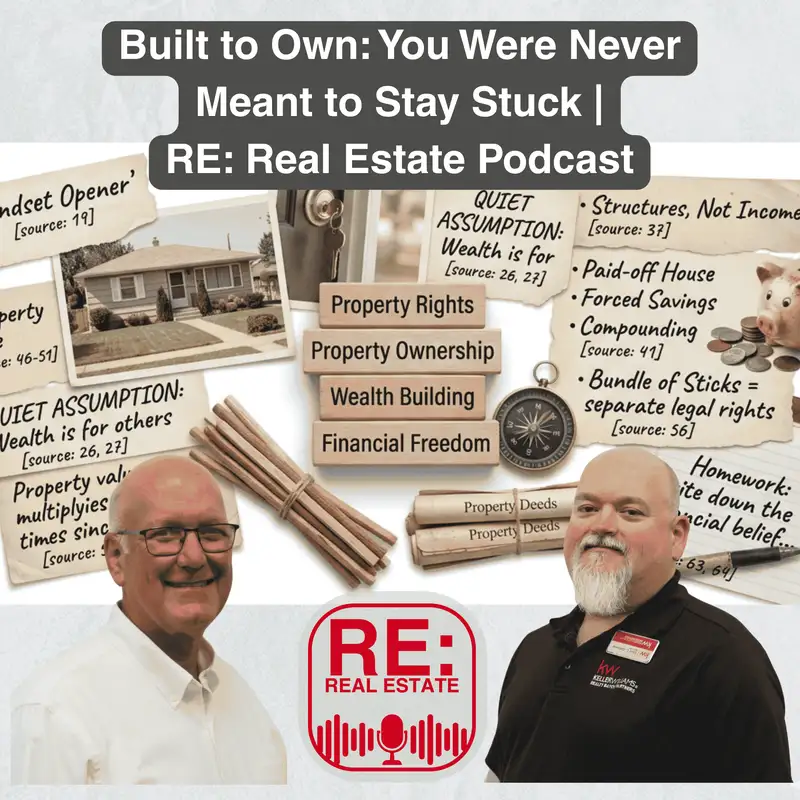
this built-on series is structured around four pillars across ten episodes. The first pillar's property rights. so that's what you actually own. And we're gonna cover that in episodes one through five. The second pillar is property ownership. How you get in, and especially if you've been told you can't. That's gonna be episode six.
Pillar three is going to be wealth building. That's how ownership compounds. And that's episode seven and eight. And pillar four is financial freedom and protecting what you build and passing it on. And that's going to be in episodes nine and ten. Next week, episode two is the bundle of sticks. And while that sounds silly and you're not quite sure what that means.
some people may think, a house is a bundle of sticks. It kind of is, but probably not in the way you think. It's actually the single most important concept in the series. Once listeners see that ownership is a bundle of separate legal rights, not just a roof, then everything clicks.
It's not designed to funnel anyone into anybody's office. It's a framework, full stop. If at the end of ten weeks the listener takes the framework, applies it to themselves, and never talks to a real estate agent, the series did its job.
Ten weeks of legal, financial, and mindset framework that working families have used for centuries to build wealth laid out plainly with the listeners freedom is the only goal.
And you know, seriously, this this is this series will not contain any pitches. we don't care. The goal of this is to provide tools for you as our listeners to get to the financial freedom and that prosperity. And you don't need to be rich.
To do that. You just have to have a plan.
All right. Next we've got some homework. so homework for the week. Write down the one financial belief you inherited from your parents, your community, or your peer group, the one that you've never seriously questioned. Could be about money, could be about ownership, could be about debt, and who gets to be wealthy. Whatever shows up first when I ask the question.
Write it down on paper or in your phone, somewhere where you can find it again. Save it. We're going to come back to it in episode ten, and I think you're going to be surprised at where you end up on how you think about that.
Ben Harang (09:37)
that's just an overview of what the next nine episodes are going to be like. Hopefully you'll get something from it. Next week we get into the Bundle of Sticks, which you actually own when you own property and why each piece has independent value.
If today landed for you, share it with somebody you think needs to hear it. That's the best thing you can do for our show. And honestly, the best thing you can do for them. Subscribe wherever you get your podcasts so you don't miss next week's episode. You can find every episode at rerealestatepodcast.com and on YouTube at at RE Real Estate Podcast. We'll see you next week, Clint.
Clint C. Galliano (10:23)
All right, Ben. Have a good one.
Ben Harang (10:26)
You too.
Creators and Guests