Built to Own: 6 Property Rights Most Homeowners Can't Name | RE: Real Estate Podcast
Clint C. Galliano (00:00)
You don't actually own your house. You own a bundle of six legal rights, and most homeowners can't name three of them. By the end of today, you'll be in the small minority who can. This is built to own.
Ben Harang (00:31)
Hello everybody and welcome back to another episode of the RE Real Estate Podcast. I'm Ben Harang, and with me today is my co host, Clint Galliano. How you doing today, Clint?
Clint C. Galliano (00:46)
I'm doing wonderful, Ben. I'm back to being wonderful. How you doing?
Ben Harang (00:51)
Last time you were terrific. I'm terrific, man. Life life's good. Life's good. last week we kicked off our 10-part series, Built to Own, with the mindset opener, the quiet assumption that ownership and wealth are for other people. And why that assumption does not hold up.
If you missed it, go back and listen first. Today we get into the framework that everything else is built on. Clint, you've been calling this the most important episode of the ten.
Clint C. Galliano (01:30)
I have, and I mean it. If a listener only catches one episode of this series, this is the one. Because what we're talking about today is the difference between thinking you own a house and actually understanding what you own. Most homeowners don't. And what you don't know about your own property is what quietly costs you wealth across decades.
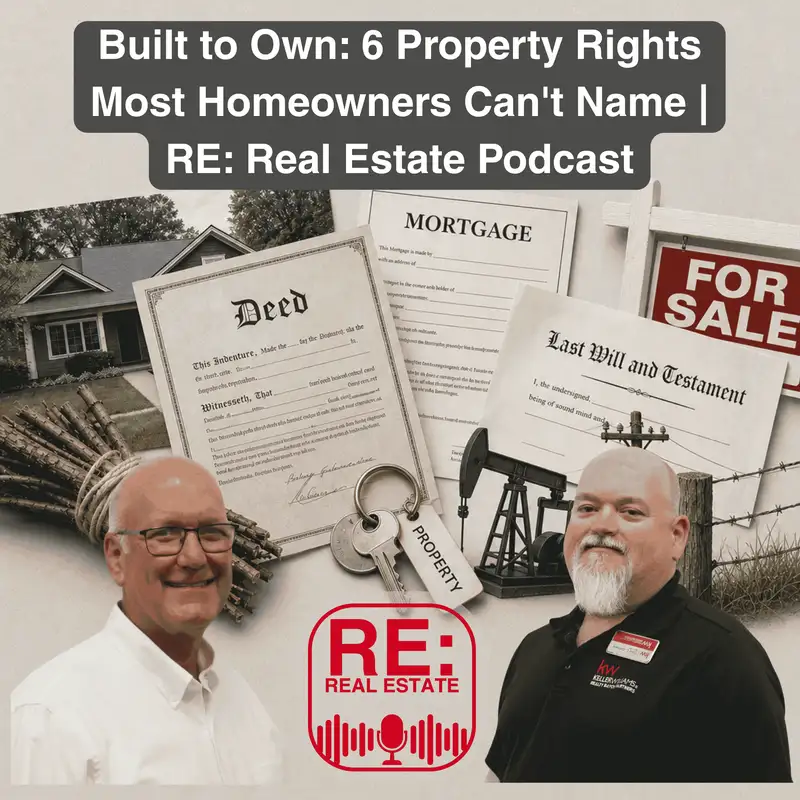
The bundle of sticks doctrine, it's a 500-year-old idea in property law that almost nobody outside of law school ever gets taught. It's the idea that ownership is not a thing. It's a collection of legal rights tied together like a bundle of sticks. Each stick is separate. Each one has its own economic value.
The six sticks we're going to walk through today are use, exclude, transfer, encumber, profit, and devise. Why this matters? Every wealth strategy in real estate, every single one is about which sticks you hold, which sticks you sell, which sticks you rent out, and which ones you pass down.
So quick preview. Next week we get into Louisiana civil law specifically, because our state handles some of these sticks differently from every other state in America. So our standard disclaimer is that, you know, nothing in this episode is legal, tax, or financial advice. Always consult a Louisiana attorney, CPA, and a licensed real estate professional for your specific situation.
So Ben, let's start from the beginning. What does it actually mean to say ownership is a bundle of sticks?
Ben Harang (03:20)
Well, there's a mental shift first. Ownership is not a physical thing you possess, it's a legal construct, a collection of rights you hold against the rest of the world. The classic metaphor in property law, going back centuries, a bundle of sticks tied together with a string. Each stick is a separate legal right. All the sticks together make up complete ownership. Separated, they have value individually.
You can hold all the sticks, you can sell some, you can lease some, you can pledge some as collateral, you can give some away. It's not theoretical. This is how every real estate transaction in America works. When you mortgage a home, you handed the bank one of the sticks. The right to take the property if you don't pay. When you sign a lease as a renter, you hand you were handed a stick for a year.
The wealthy think about property this way naturally. Most working homeowners don't because nobody ever taught them. Why it matters. Every wealth strategy in real estate is just about which sticks you hold, which you sell, which you rent out, and which you pass down. Once you see ownership as a bundle, everything else in this series clicks into place.
Clint C. Galliano (04:51)
Picture this in your head walking the sticks.
So we're gonna kinda go through each one and and talk about
First one, stick one, is the right to use. So the definition is the right to occupy, build on, form, drill, lease, or otherwise enjoy the property. So as an example, that would be living in your home, building a deck, planting a garden in the backyard, drilling a water well, even renting it out to a tenant, because leasing is a use of the property.
It can be limited by zoning, deed restrictions, HOA rules, building codes, or environmental regulations.
Ben Harang (05:36)
Okay, stick number two is the right to exclude. The definition, the right to decide who can and cannot be on your property. an example is telling a door to door salesman to leave, calling the police on a trespasser, putting up a fence, even posting a no soliciting sign.
This is a stick that makes ownership different from public access, limited by utility easements, eminent domain, and recorded servitudes.
Clint C. Galliano (06:12)
Stick number three, the right to transfer. The definition. It's the right to sell, gift, or otherwise convey your property to another person or entity. As an example, it can be selling your home on an open market, donating it to a family member, putting it into a trust. This is the stick that makes real estate liquid. The fact that you can convert it into cash on demand.
It can be limited by clear title, valid recording, sometimes spousal consent in Louisiana community property, sometimes lender approval.
Ben Harang (06:55)
stick number four, the right to encumber. Definition is the right to put burdens on the property, mortgages, liens, leases, or servitudes. An example is getting a mortgage. The bank now has a stick of its own. Leasing your property to a tenant, they have a stick for the lease term. Granting an easement to the power company to run power line.
This is a stick that turns property from a place to live into a financial tool. It's limited by existing encumbrances, the consent of any co-owners, and lender covenants if you have a mortgage on it.
Clint C. Galliano (07:40)
Mistake number five, the right to profit. Definition: the right to derive economic benefit from the property. As an example, rental income from a tenant, mineral royalties from oil and gas production, timber harvests from a wooded tract, crop yields, and appreciation.
The slow, quiet increase in value over time. This is the wealth engine stick. Episode seven is built around this one specifically. So we'll be talking about that later on down the line. It can be limited by tax obligations, mortgage covenants, and specific lease and contract terms.
Ben Harang (08:28)
the final stick, stick number six, is the right to devise. the definition is the right to pass property down at death or while living through a donation. An example is leaving your home to your children through a will, donating it inter vivos while you're alive, placing it in a trust. This is a generational wealth stick.
Episode nine is built around this one. It's limited by Louisiana forced heirship rules, federal estate tax considerations, the validity of the document used to transfer.
Clint C. Galliano (09:10)
why does this matter?
Let's look at a $250,000 home in Houma. It's average, it's normal. You can picture it. Now let's break it down by stick. All right. The right to use the value of living here. Replacement rent cost is roughly $1,500 a month or $18,000 a year of housing. The right to exclude. The peace of being able to live there as you choose.
The right to transfer, the two hundred and fifty thousand dollar sale value on demand. The right to encumber, roughly one hundred eighty thousand to two hundred thousand dollars of mortgage capacity depending on equity. The right to profit, rental. If you moved and rented it out, around eighteen hundred dollars a month. The right to profit appreciation, the
At a modest 3% per year, roughly $7,500 a year, compounding. The right to devise, the full value passes to heirs with a stepped-up value basis. That alone can save tens of thousands of dollars in taxes. Now imagine you bought the same home, but the previous owner reserved the mineral rights. You lost one stick.
If oil or gas is produced, that royalty flows on to the previous owner's heirs, not yours. In oil and gas country, this can be tens of thousands of dollars across the life of a well. Or imagine an old servitude on the property that nobody mentioned at closing. Suddenly the neighbor has a legal right to drive across your backyard. You lost part of the exclude stick.
Same property, same address, different sticks, different wealth. This is why next week, when we get into Louisiana civil law specifically, because our state handles some of these sticks differently from every other state. And the week after, we go deep on mineral rights, because an oil and gas country, that's the stick people lose without realizing.
Ben Harang (11:23)
Okay, so here's your homework. It's physical this time. You actually have to find a document. If you own a home, pull your closing documents, specifically the act of sale and the recorded title. They might be in a file cabinet, they might be in an email from your closing attorney. They might be on a disc somewhere. And if they are, find them. Read them. Locate the description.
of what you own, then specifically look for anything labeled as a reservation, a servitude, an easement, or an exclusion, things like mineral rights reserved or subject to servitude.
Most of you have never read the paperwork. If you find something you didn't know was there, that's a stick that's not fully of yours, and now you know it. If you don't own yet, your homework is different. Find the recorded title for for a property in your family, your parents, your grandparents, anybody who'll let you look. Same exercise. Read it with a bundle in mind.
Clint C. Galliano (12:36)
Alright, so that's episode two of Built to Home. Next week we get into Louisiana civil law specifically, the five practical ways our property law differs from every other state in America. If you live in Louisiana, or you might ever inherit Louisiana property, you don't want to miss it.
Ben Harang (12:56)
Subscribe wherever you get your podcast so next week's episode lands automatically.
Clint C. Galliano (13:00)
Every episode can be found at rerealestatepodcast.com. You can to it on the website. You can find our YouTube channel there. Or you can subscribe with your favorite podcast app. That's rerealestatepodcast.com. All right. We'll see you next week.
Ben Harang (13:21)
All right, Clint, have a good one.
Clint C. Galliano (13:23)
You too, Ben.
Creators and Guests